2008–09 World Junior Championship final
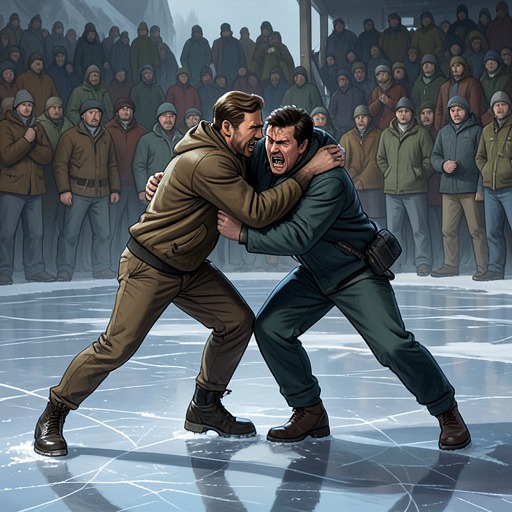
Heated RivalryThe 2008–09 World Junior Championship final is the defeat that makes Shane Hollander and Ilya Rozanov’s rivalry personal as well as public. Russia wins the tournament, while Shane and Team Canada are left with silver; in the handshake line, amid camera flashes, the two young stars meet not as abstractions in a draft debate but as opponents who have unsettled one another.
Background and Stakes
The tournament takes place in Regina in December 2008. For Ilya, who has trudged through Saskatchewan cold on his first North American trip, the setting offers little beyond weather and hockey. The championship matters especially because it is his chance to see Shane in person. Shane, seventeen and already a Canadian phenom, has attracted such intense attention that Ilya has grown tired of hearing his name.
Their contest carries a future-facing pressure. Both are eligible for the NHL entry draft the following June, and they are expected to be the first two picks, although the predicted order depends on whom one asks. Before the final, their rivalry is therefore already being made in public: by their performances, by the media’s attention, and by the unresolved question of which player is better.
The Final and the Handshake
After the final game, the Russian players pause their celebration to line up with the Canadians for handshakes. Shane has no wish to make the gesture; he feels that Russia played dirty, and he has hated facing the team. His resentment is sharpened by respect he would rather not feel: Ilya is, in Shane’s view, exceptionally good. The press has spent the tournament building up their rivalry, and Shane suspects that the coverage has intensified his own hostility.
Camera flashes surround the handshake with Ilya. Shane looks him directly in the eye and offers a terse congratulations. Ilya smirks and points ahead to the draft, turning the encounter into a promise of another contest. The exchange is brief, but it concentrates the forces shaping their rivalry: public scrutiny, national competition, Shane’s anger at losing, and Ilya’s apparent ease in provoking him.
Defeat and Its Cost
The silver medal feels to Shane like an insult rather than an achievement. He endures the Russian national anthem and blinks back tears he refuses to shed. The defeat is more than a lost game in his own account: he had expected to lead Canada to gold on home ice, and he believes that the country had placed its hopes on his seventeen-year-old shoulders. He leaves the tournament feeling he has let those expectations down.
Ilya’s conduct across the tournament gives the loss a sharper personal edge. At face-offs, he has repeatedly met Shane’s eyes and smirked; Shane is usually difficult to unsettle, but this gesture throws him off balance. The final thus leaves him with more than the memory of Russia’s victory. It leaves him confronting an opponent who can match him in skill and affect his composure.
Rivalry in Retrospect
The final establishes the rivalry through a public sporting ritual: a medal ceremony, a handshake line, and an exchange about the next competition. Its focus falls less on the details of play than on what the outcome and the encounter mean to Shane. The silver medal embodies national disappointment; Ilya’s smirk makes that disappointment difficult to separate from the person who helped cause it.
Later, Shane describes the fear of being attracted to an archrival who is also a man, and the two speak of having kept their relationship secret for almost ten years. In that longer history, the final belongs to the beginning of a connection first legible as competition. It does not disclose their future relationship, but it gives their eventual intimacy a distinct point of contrast: the public image of two hostile prospects is already taking shape as they face each other across the handshake line.